

West Houston flood diligence should combine FEMA maps, seller disclosures, prior-loss information, drainage observations, local flood-control sources and insurance quotes for the exact property. A home outside a mapped high-risk zone can still flood, and neighborhood-level claims are not enough.
What FEMA maps can—and cannot—tell you
FEMA maps show modeled flood hazards and insurance zones. They are essential, but they do not capture every drainage problem, future condition or rain event.
Review the property’s available history
Read the seller’s disclosure, ask about prior water entry and repairs, and review available claims or elevation information. Inspect visible grading, drainage paths and nearby channels.
- Seller disclosure and repair records
- Insurance loss history when available
- Elevation certificate if one exists
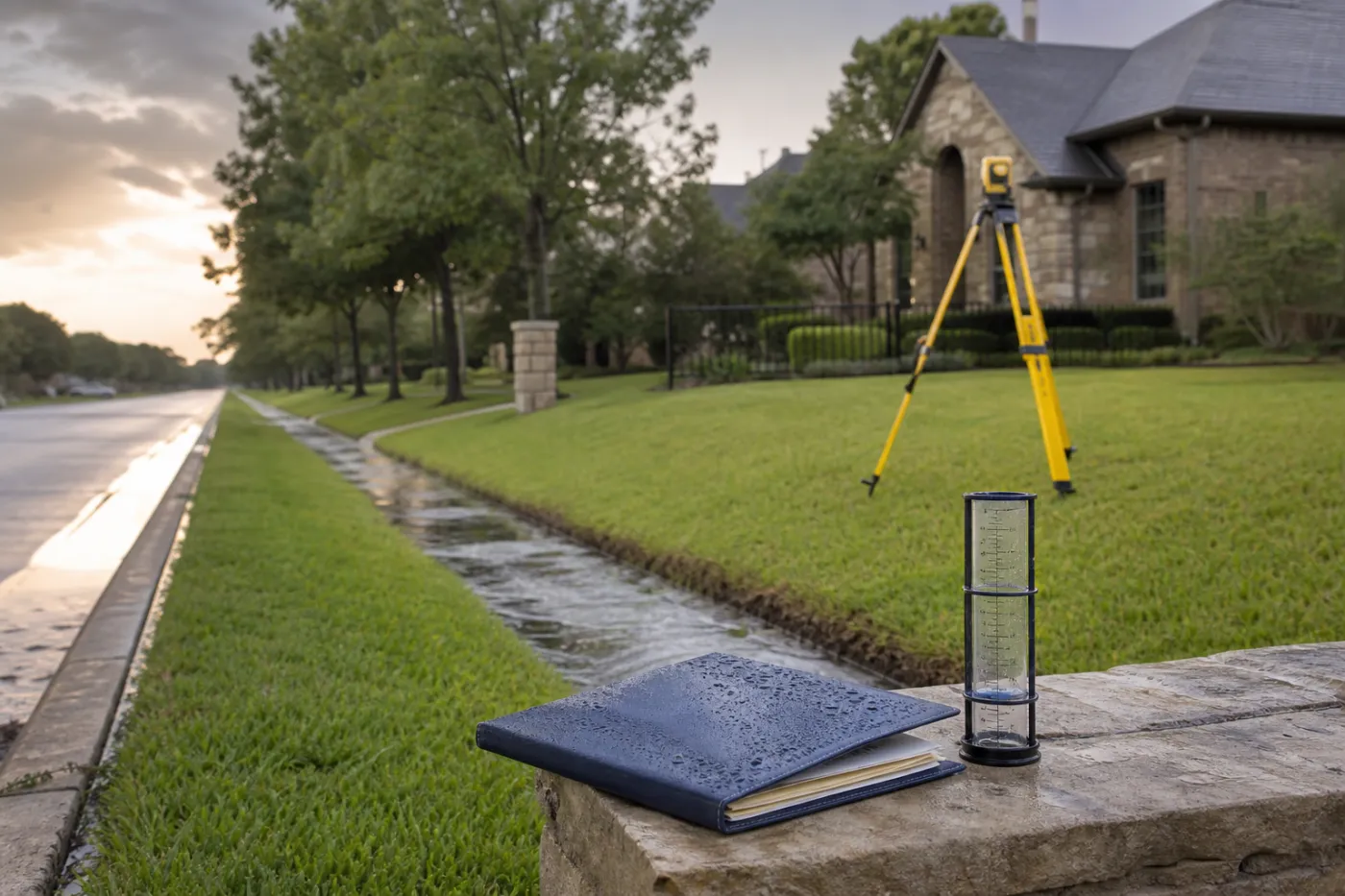
- Drainage and grading observations
Get insurance quotes before the option period ends
Ask an insurance professional for homeowners and flood options tied to the address, coverage and buyer profile. Mortgage requirements are a minimum—not a complete risk assessment.
Use county flood-control and drainage sources
Harris County Flood Control District and Fort Bend County Drainage District publish projects and watershed information that can add local context to FEMA mapping.
Make a property-specific decision
Balance documented risk, insurance availability, mitigation, price and your own tolerance. No agent, map or seller can guarantee a property will never flood.
What is the difference between a flood zone and flood risk?
A FEMA flood zone describes mapped, modeled conditions used for floodplain management and insurance decisions. It does not guarantee that a property will or will not flood. Intense rainfall, street drainage, sheet flow, detention performance, nearby construction and local elevation can create risk outside a mapped high-risk area.
Read the map at the parcel level and note the map effective date. Then add property-specific evidence: seller disclosures, prior water entry, repair records, elevation information, drainage observations and insurance history when available. A neighborhood entrance or nearby house can sit at a different elevation and should not substitute for the subject property.
- Map zone and effective date
- Finished-floor and adjacent elevations
- Street and lot drainage path
- Prior water entry or claims
- Changes since the map was adopted
How should a buyer compare flood-insurance quotes?
Request address-specific homeowners and flood quotes early enough to affect the contract decision. Compare coverage limits, deductibles, building and contents coverage, waiting periods, exclusions and the assumptions used by the carrier. A lender requirement is a financing minimum, not a complete statement of the buyer’s exposure.
Ask how the quote could change if elevation documentation, prior claims or occupancy details change. Keep the quote with the date and coverage inputs. Insurance availability and pricing can move, so a casual estimate from another property or a prior owner should not anchor the budget.
- Exact address and occupancy
- Building and contents limits
- Deductibles and exclusions
- Elevation documents used
- Quote expiration and binding requirements
Which flood-diligence shortcuts should buyers avoid?
Do not stop after seeing that a home is outside a mapped high-risk zone. Do not accept a subdivision-wide statement as proof about a parcel, and do not assume fresh flooring or paint is unrelated to prior water. Ask direct questions, read the disclosure closely and let the inspection follow visible clues without making unsupported conclusions.
Walk the exterior after rain when practical. Look at grading, downspout discharge, low areas, drainage inlets and the relationship between the slab, street and neighboring lots. Combine those observations with official sources and professional advice. No map, seller or agent can promise that a property will never flood.
- Avoid yes-or-no zone thinking
- Verify the parcel rather than the subdivision
- Investigate repairs and drainage clues
- Obtain quotes before deadlines
- Document remaining uncertainty
Frequently asked questions
Can a West Houston home flood outside a FEMA flood zone?
Yes. FEMA zones describe modeled risk, but flooding can result from intense rainfall, drainage limits or local conditions outside mapped high-risk areas.
Is flood insurance required?
A lender may require it for certain mapped zones, but owners elsewhere can often purchase coverage voluntarily.
Where can I check a flood map?
Use FEMA’s official Flood Map Service Center and enter the exact address.
What should I ask the seller?
Review the statutory disclosure and ask about prior flooding, water entry, claims, repairs and any elevation documents.
Does being outside a FEMA high-risk zone mean flood insurance is unnecessary?
No. Homes outside mapped high-risk zones can still flood. Evaluate the address, drainage, history, elevation and insurance options based on your risk tolerance.
When should a West Houston buyer request flood quotes?
Request quotes before the option period or other meaningful contract deadline ends so cost and availability can influence the decision.
Official sources and further reading
Use these primary sources to verify current, address-specific information.
Put the guide in local context
Use these community guides to narrow the search, then verify the exact property’s records.
Get guidance for your specific move.
Online research is a useful starting point. The home, neighborhood and timing still need to work together. Text John with what you are considering and get a practical next step.
Text John