
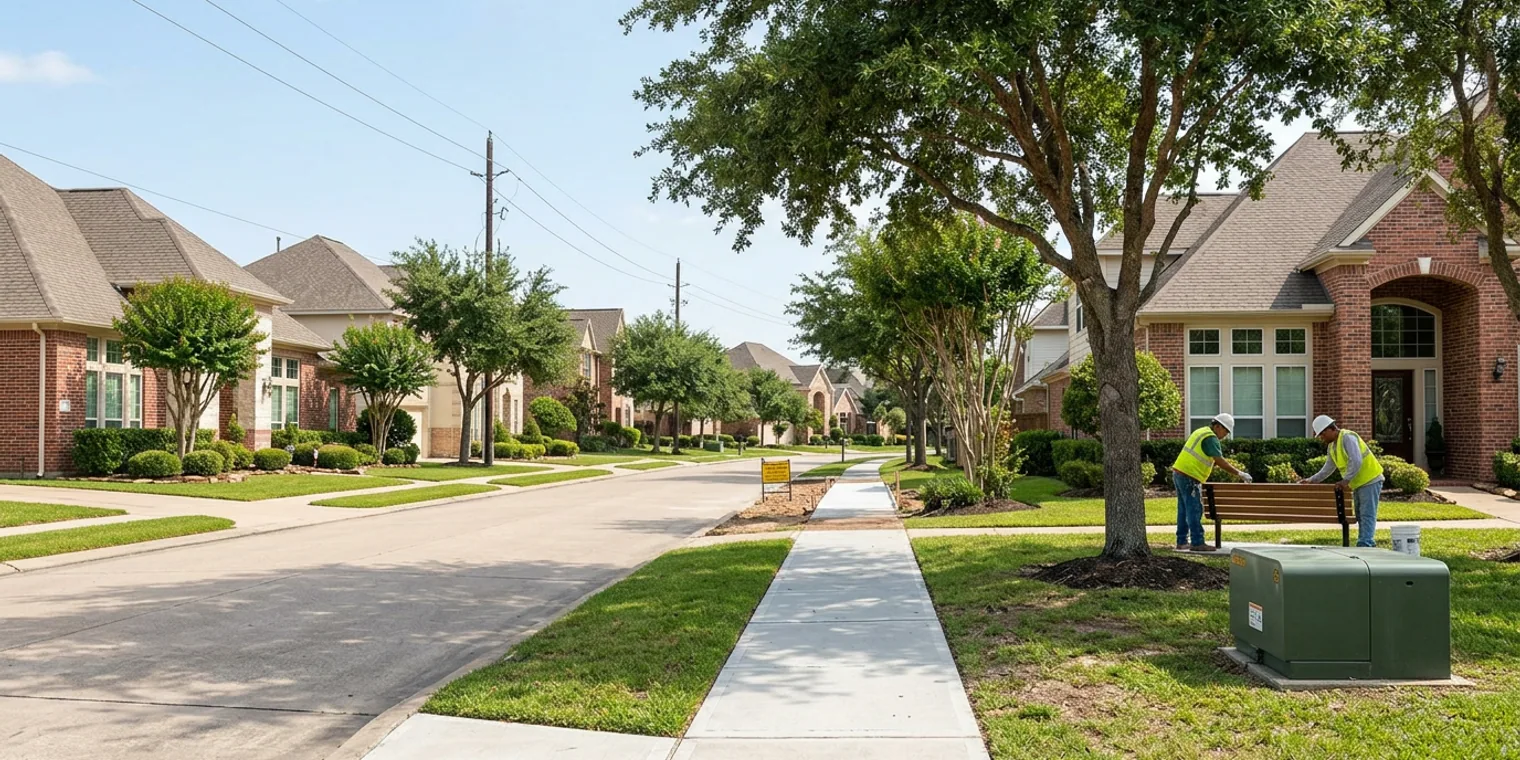
When evaluating a neighborhood, it's easy to focus solely on the home. However, the community infrastructure surrounding your property significantly affects quality of life, property values, and long-term satisfaction. This guide explains how to monitor and understand infrastructure projects, maintenance, and amenity changes relevant to homeowners in West Houston, Sugar Land, Katy, and surrounding areas.
How Infrastructure Projects Impact Your Home & Community
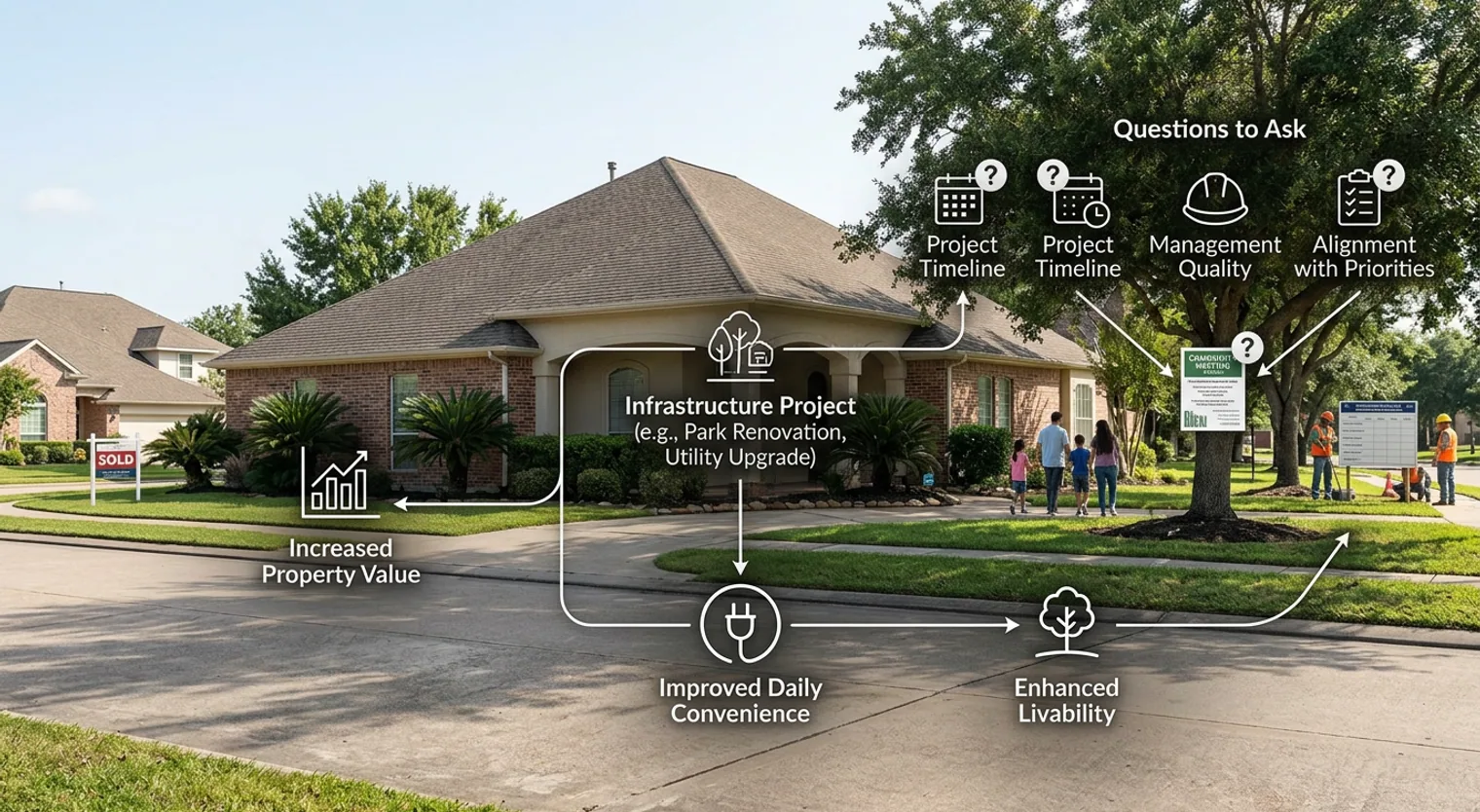
Infrastructure includes systems and facilities serving your neighborhood, such as parks, pipelines, utilities, stormwater management, and public facilities. Understanding local developments helps you make informed decisions about your property investment.
Why Infrastructure Matters to Homeowners
Infrastructure directly affects property values, daily convenience, and long-term livability. For example, a well-maintained park enhances walkability and family appeal. A pipeline repair project, while temporarily disruptive, prevents costly failures. Noise mitigation efforts address quality-of-life concerns that can influence resale value.
When evaluating a community, consider:
What projects are underway or planned? This impacts current conditions and future development. How are projects being managed? Professional planning and communication indicate effective community management. What's the timeline? Knowing the duration of temporary disruptions helps with planning. How do projects align with your priorities? Families valuing parks need to know maintenance schedules; those concerned about noise need transparency regarding mitigation efforts.
Real Examples in West Houston Communities
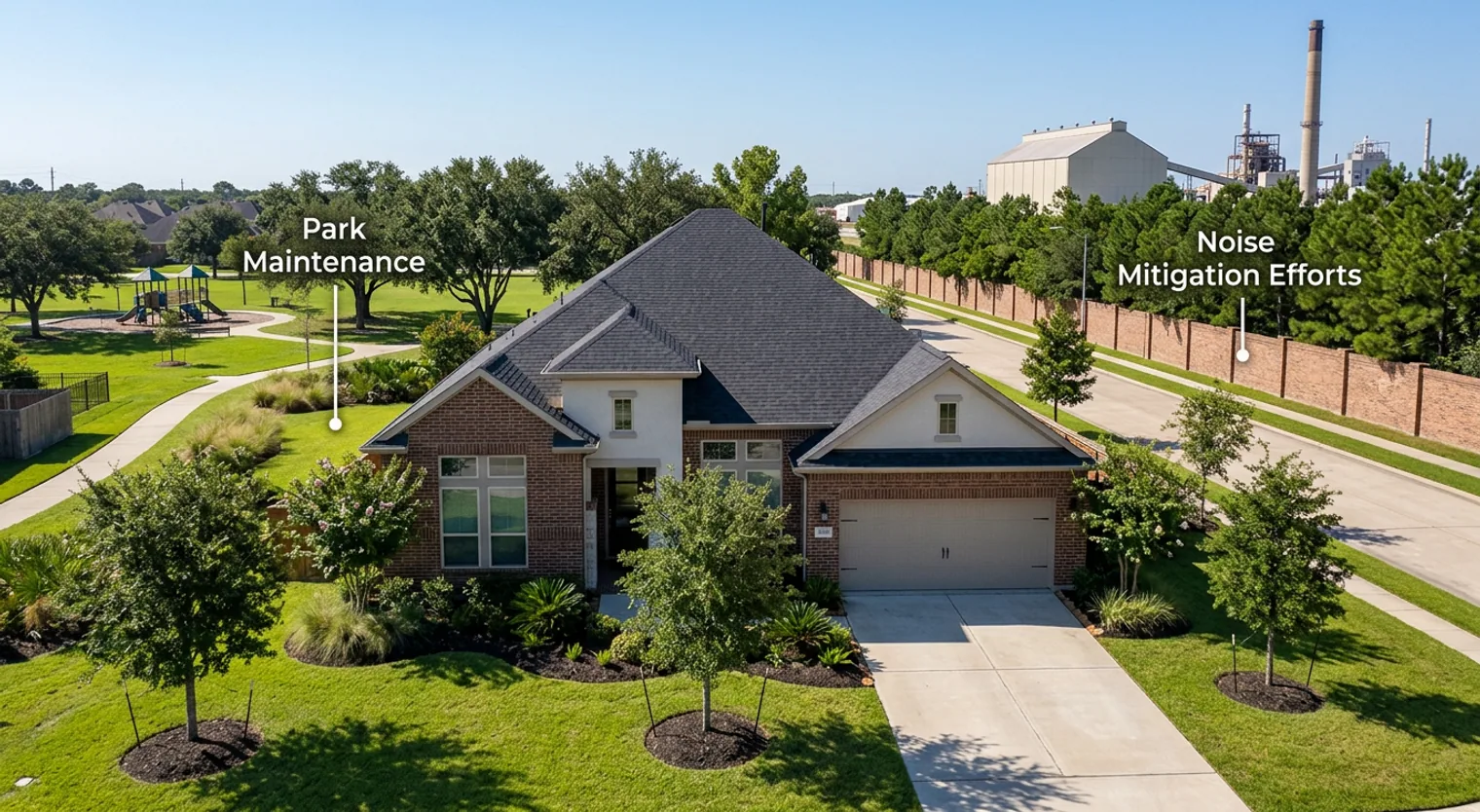
Communities like Sugar Land actively manage infrastructure to balance growth with quality of life. For instance, when parks require maintenance, such as pipeline repairs, transparency and communication are crucial. Residents appreciate knowing the reasons for closures and reopening timelines. Similarly, when industrial or commercial neighbors create noise concerns, proactive mitigation efforts demonstrate community leadership and help protect residential property values.
How to Research Infrastructure in Your Area
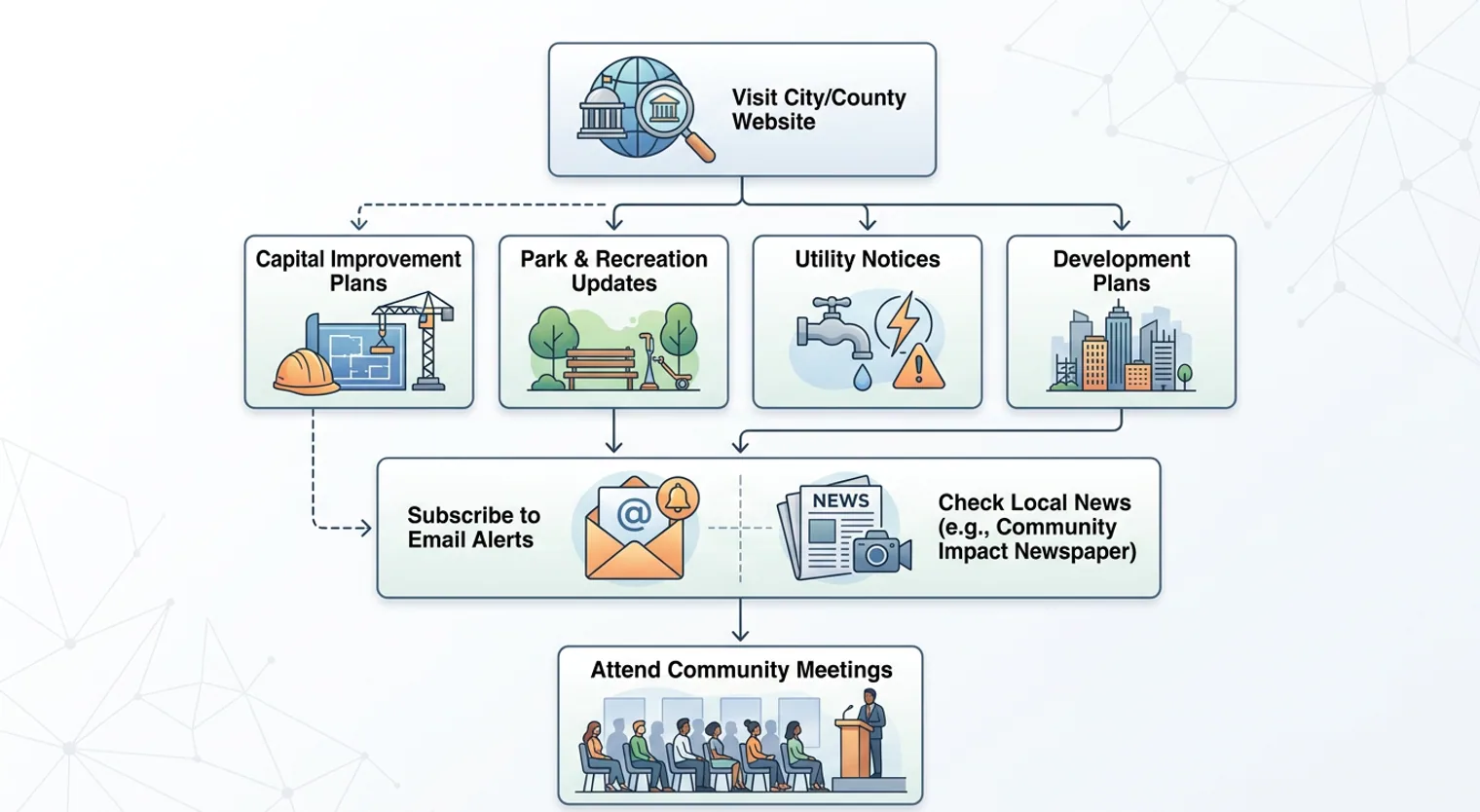
Start by visiting your city or county government websites. Most provide:
Capital improvement plans (multi-year project schedules) Park and recreation updates (closures, renovations) Utility notices (maintenance, upgrades) Development plans (future projects affecting your area)
Local news sources like Community Impact Newspaper offer timely updates. Subscribe to city/county email alerts for official announcements. Attend community meetings or review meeting minutes to understand decision-making processes.
The Bigger Picture
Infrastructure investment indicates community health. Areas that maintain parks, address utility concerns, and communicate openly tend to retain property values and attract quality residents. When buying or selling, consult your real estate professional about recent or planned infrastructure projects as they are integral to your investment's complete picture.
For example, Sugar Land's Quail Valley North Park closure for pipeline repairs demonstrates how communities manage essential infrastructure maintenance. This project addresses critical underground utility systems. Understanding such projects—their purpose, timeline, and impact—helps residents contextualize temporary disruptions within broader community investment.
Another example is Sugar Land officials exploring noise mitigation options for the Imperial Sugar Char House. This shows how communities balance industrial operations with residential quality of life. Proactive noise management demonstrates community responsiveness, an important factor in neighborhood livability.
Your Action Items
Start here: Visit your city or county government website to find their capital improvement plan or project calendar. Most are free and publicly available. Sign up for email alerts about projects in your area.
Next: Bookmark Community Impact Newspaper for your specific region (e.g., Sugar Land/Missouri City, Katy, Cypress) for timely updates.
Then: If considering a specific neighborhood, ask your real estate professional about recent or planned projects there.
Infrastructure and community amenities are part of what you're buying when you invest in a home, not just the structure itself. By staying informed about projects, closures, and improvements in your area, you can make better decisions about where to live and understand the full context of your neighborhood's health.
Get guidance for your specific move.
Online research is a useful starting point. The home, neighborhood and timing still need to work together. Text John with what you are considering and get a practical next step.
Text John