
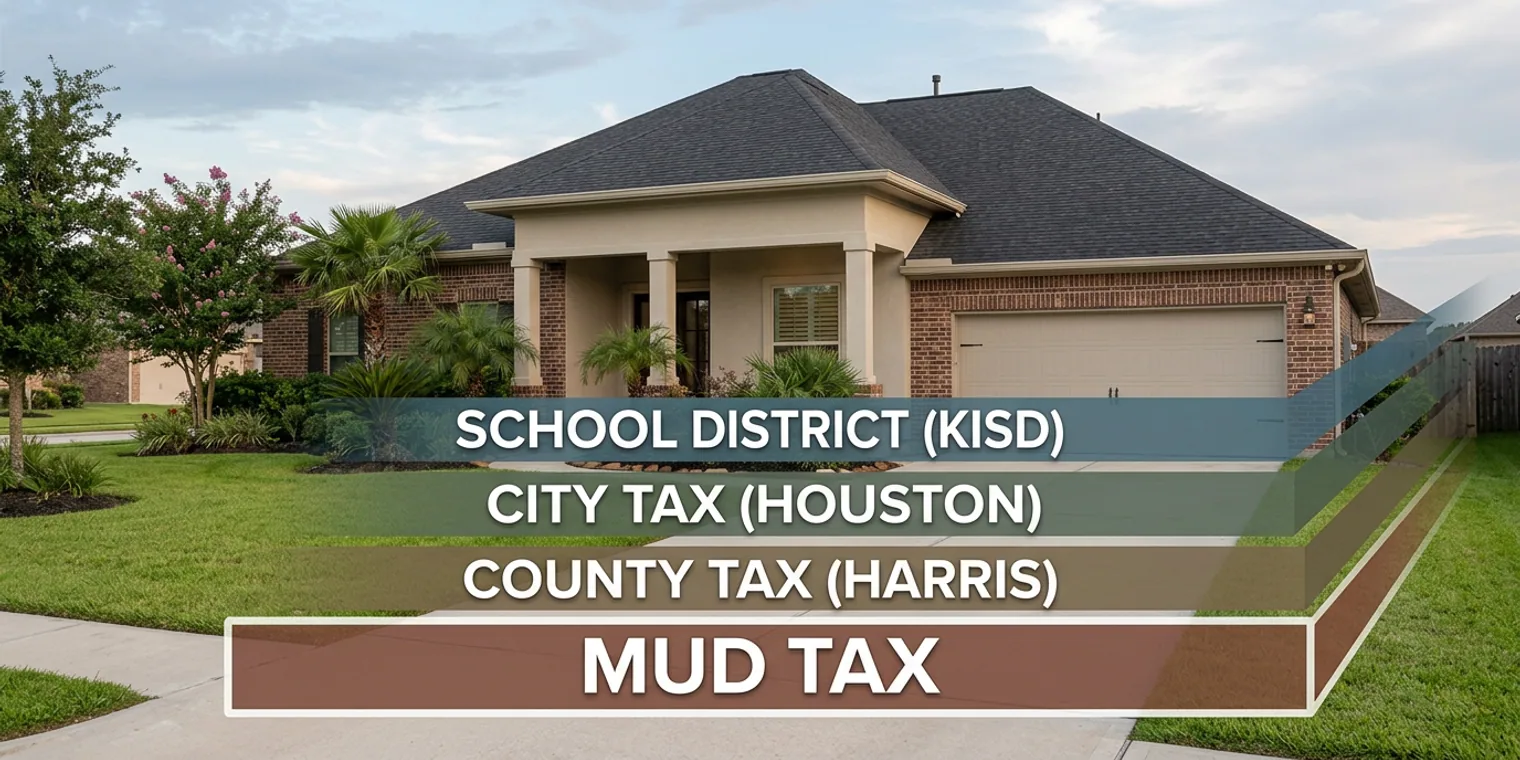
If you're buying or own property in Katy, Fulshear, Sugar Land, Cypress, or the Energy Corridor, you've likely heard the term "MUD." Many West Houston homeowners don't fully understand what these districts are, how they affect property taxes, or why they matter to your financial picture. This post breaks down MUDs in plain language and shows you exactly where to find the information you need.
Topic Deep-Dive: Understanding Municipal Utility Districts (MUDs)
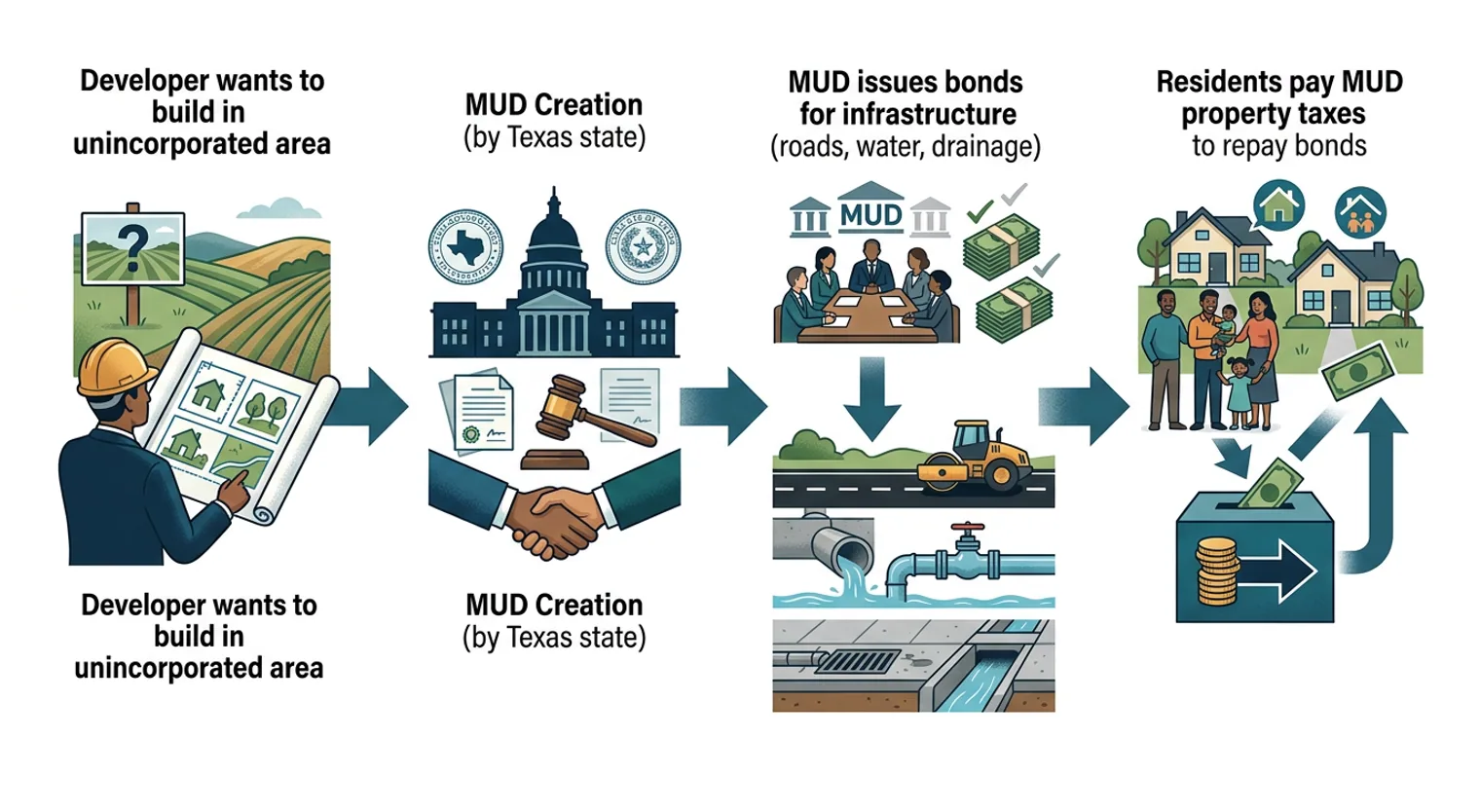
A Municipal Utility District (MUD) is a special taxing district created by the state of Texas to provide water, wastewater, and drainage services to developing areas outside city limits. Think of it as a local government entity dedicated specifically to utilities and infrastructure.
Here's why this matters to you: MUDs levy their own property tax on top of county, school, and city taxes. In West Houston areas, MUD tax rates can range from 0.5% to over 1.5% of your property's appraised value annually—meaning a $400,000 home could carry $2,000–$6,000+ in MUD taxes per year.
How MUDs Work
When a developer wants to build in unincorporated areas, they often create a MUD to finance the infrastructure needed—roads, water lines, drainage systems. The MUD borrows money through bonds and repays that debt through property taxes collected from residents. As the district matures and bonds are paid off, tax rates typically decrease, but they rarely disappear entirely.
Key Financial Implications
MUD taxes are in addition to school district, county, and city taxes Rates vary dramatically by district and year of creation Older MUDs (established 15+ years ago) often have lower rates than newer ones MUD debt obligations are public record and affect property values * When comparing two similar homes in different areas, MUD tax differences can add $1,000–$3,000+ annually
Why This Affects Your Decision
When evaluating a property, you must factor MUD taxes into your true cost of ownership. A home that appears affordable may become expensive once you add MUD, school, and county taxes together. Conversely, a property in an older, established MUD might have lower ongoing tax burdens.
Finding Your MUD Information
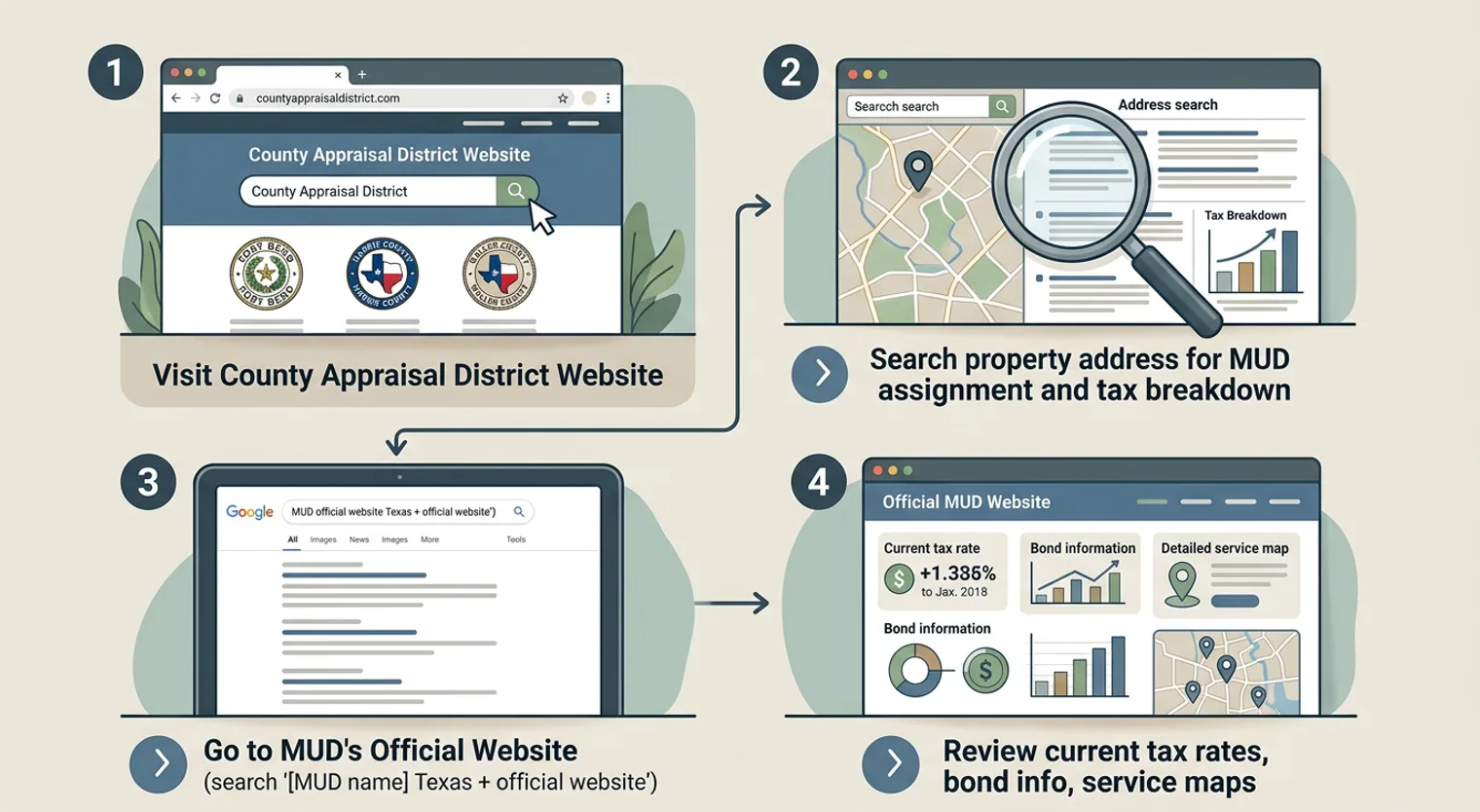
Every property in a MUD district has a unique tax ID. Your property appraiser's website (Fort Bend Appraisal District, Harris County Appraisal District, or Waller County Appraisal District) shows your exact MUD assignment. The MUD's official website provides current tax rates, bond information, and service details. This is public information—use it to make informed decisions.
Resource Spotlight: How to Research Your MUD
Start here: Visit your county appraisal district website (Fort Bend, Harris, or Waller County). Search your property address to see your MUD assignment and current tax rate breakdown. Then, go directly to that MUD's official website (search "[MUD name] Texas" + "official website") to review current tax rates, bond information, and service area maps. This 15-minute research will clarify your true tax obligations and help you compare properties accurately.
Understanding MUDs transforms how you evaluate West Houston properties. Don't let this complexity intimidate you—it's simply public information organized in a logical way. Take time to research your specific property's MUD details before making an offer or deciding to sell.
Get guidance for your specific move.
Online research is a useful starting point. The home, neighborhood and timing still need to work together. Text John with what you are considering and get a practical next step.
Text John