
Understanding Your Property Tax Bill: A West Houston Homeowner's Guide to Tax Rates, Entities, and What You Actually Owe
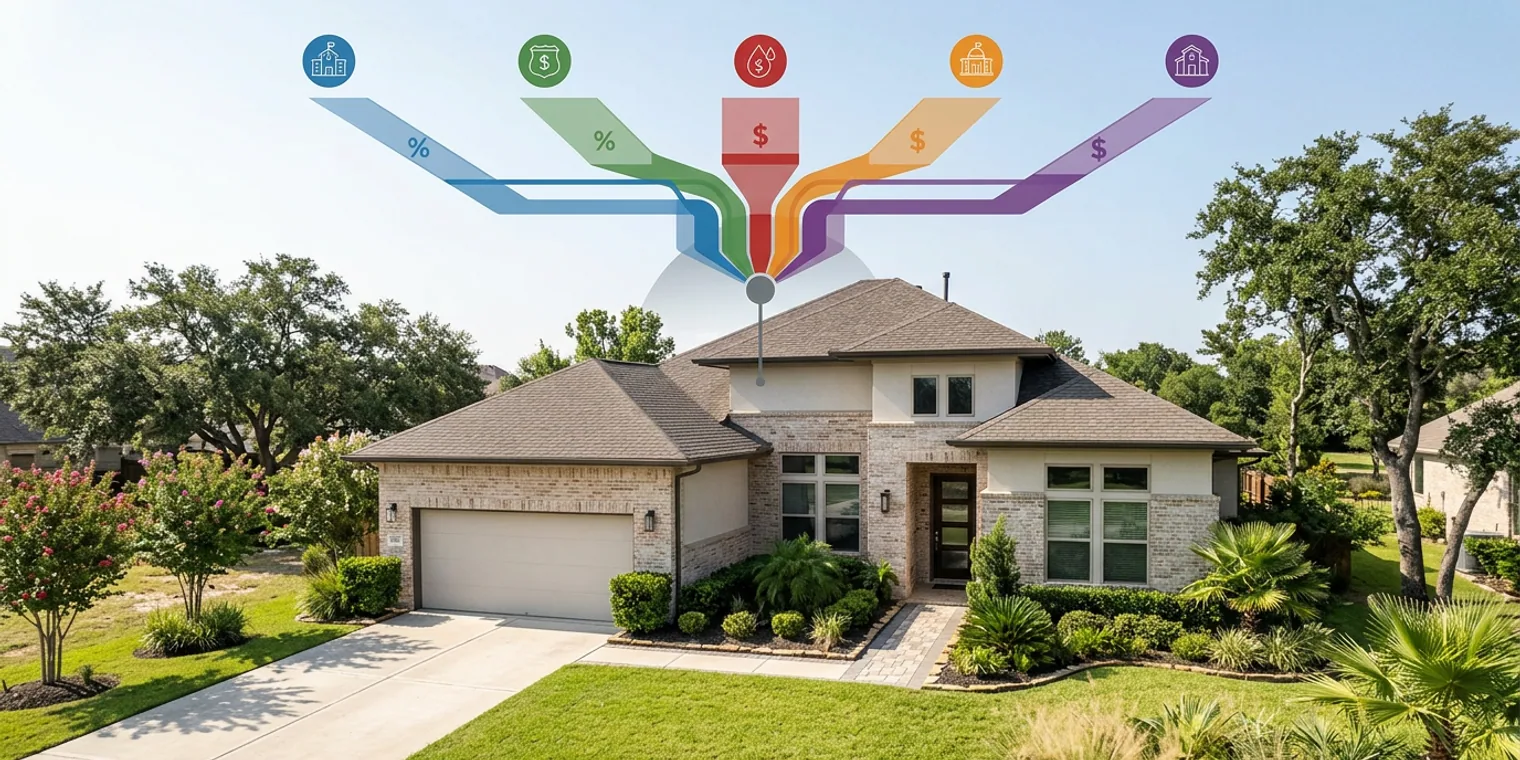
Property taxes are often the largest ongoing cost of homeownership in West Houston, yet many buyers and owners don't fully understand what they're paying for—or how much they'll actually owe. Between school districts, MUDs, county services, and special taxing entities, your tax bill can feel like a mystery. This guide breaks down how property taxes work in our area, what entities tax your property, and how to use official tools to predict your true costs before you buy or refinance.
Decoding Your Property Tax Bill—Who's Taxing You and Why
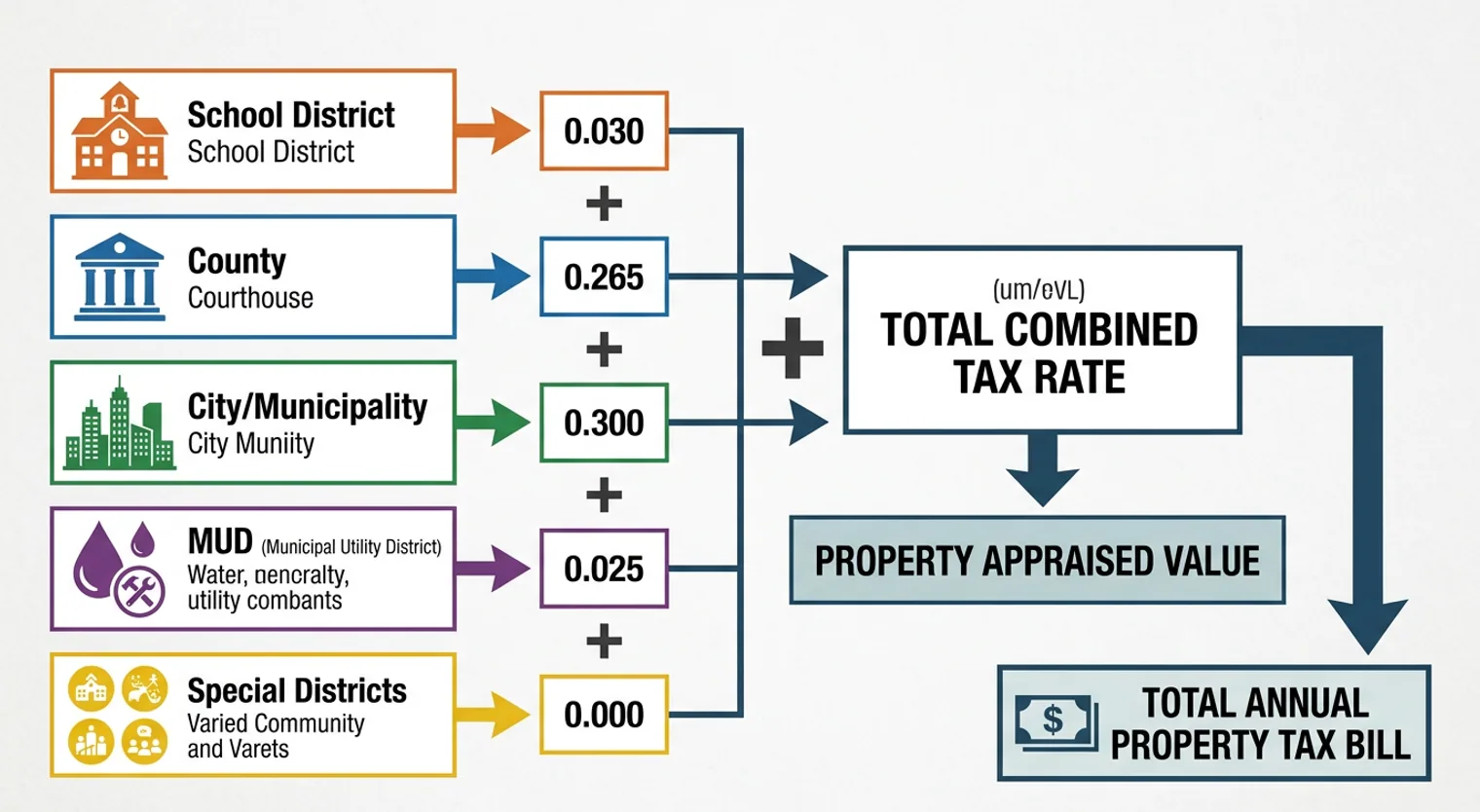
When you receive a property tax bill in West Houston, you're not paying one entity—you're paying several. Understanding this structure is critical for budgeting, comparing neighborhoods, and making informed purchase decisions.
The Entities That Tax Your Property
Your property tax bill typically includes charges from:
School Districts (Katy ISD, Lamar CISD, etc.)—usually the largest portion, funding schools and education County Government (Harris, Fort Bend, or Waller)—funding courts, roads, emergency services City or Municipality (Katy, Sugar Land, Fulshear, etc.)—if your property is within city limits MUD Districts (Municipal Utility Districts)—common in West Houston and Cypress, funding water, sewer, and drainage infrastructure * Special Districts—libraries, fire protection, emergency services, or flood control districts
Each entity sets its own tax rate independently. Your total tax bill is the sum of all these rates applied to your property's appraised value.
How Tax Rates Are Set
Every August and September, local elected officials propose and adopt tax rates for the coming year. This process is called "Truth in Taxation." The critical point: tax rates can change annually, which means your annual tax payment will fluctuate even if your home's value stays the same.
For example, if your home is appraised at $400,000 and your combined tax rate is 1.85%, you'll pay roughly $7,400 annually. But if the school district or MUD increases its rate next year to 1.92%, your bill rises to $7,680—without any change to your home's value.
MUDs: A Special Consideration for West Houston Buyers
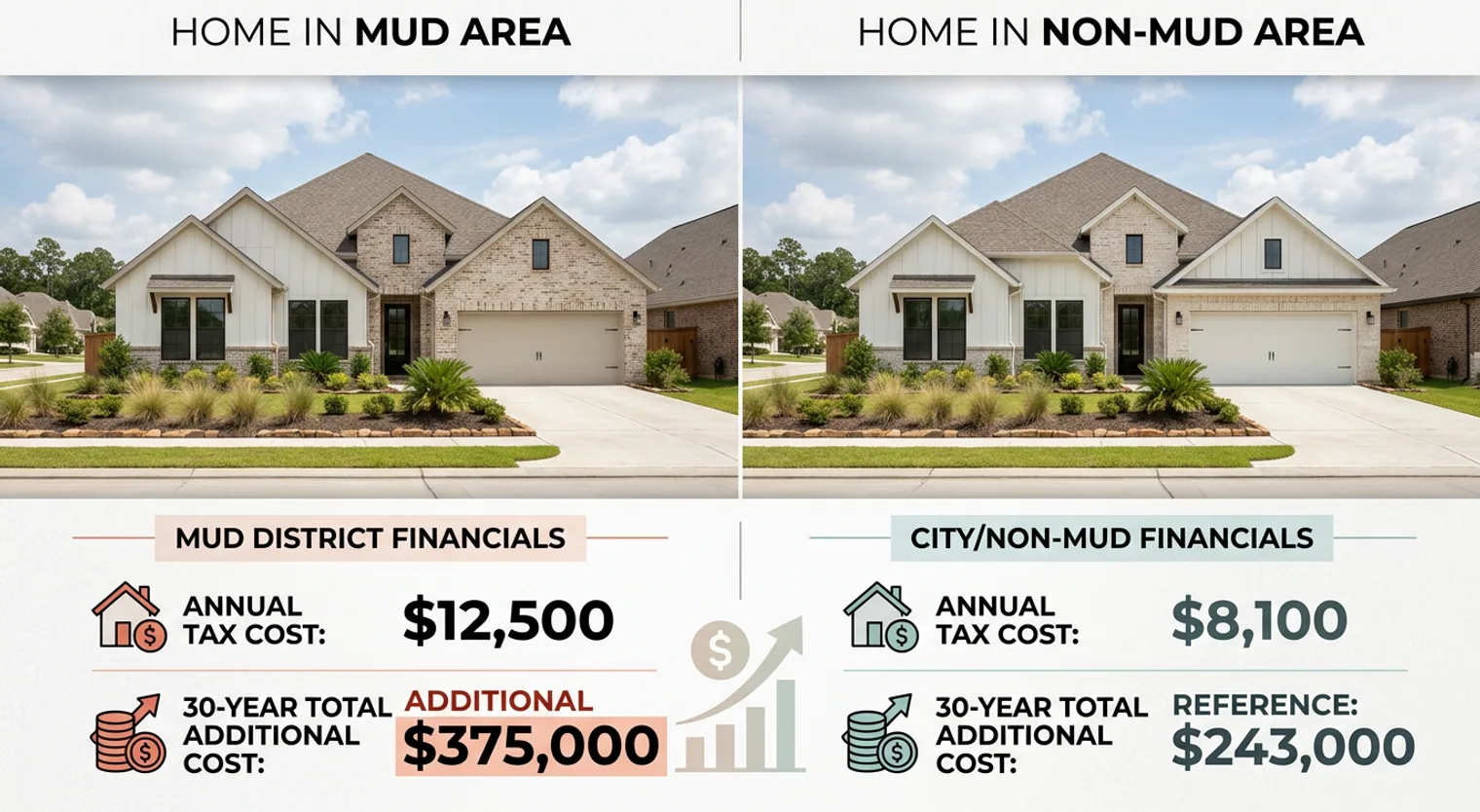
Many West Houston properties, particularly in Cypress, Katy, and newer subdivisions, are in MUD districts. MUDs are self-taxing entities that provide water, sewer, and drainage services. While this sounds straightforward, MUDs also issue bonds (debt) to fund infrastructure, which means MUD tax rates can be higher than typical county rates—sometimes 30-50% higher.
Why This Matters for Your Decision
When comparing two similar homes in different areas, the property tax rate difference can add thousands to your annual costs. A $500,000 home in a high-MUD area might cost $1,000 more per year in taxes than the same home in a non-MUD area. Over a 30-year mortgage, that's $30,000 in additional expense—before interest.
How to Find Your Specific Tax Rate
Your property's tax rate is not a mystery—it's public record. The Fort Bend Central Appraisal District and Harris County Appraisal District maintain searchable databases where you can look up any property and see exactly which entities tax it and at what rates. This is essential due diligence before making an offer.
Source: Fort Bend County Appraisal District (FB CAD)
The Fort Bend Central Appraisal District provides access to property tax information through Texas.gov/PropertyTaxes, where homeowners can find local property tax databases updated regularly during August and September as elected officials propose and adopt tax rates. This is the official source for understanding what entities tax your property and their proposed rates.
Resource Spotlight: Texas.gov/PropertyTaxes
Visit Texas.gov/PropertyTaxes and search for your county's appraisal district database (Fort Bend CAD, Harris CAD, or Waller CAD). Enter any property address to instantly see its current appraised value, tax rate breakdown by entity, and estimated annual tax bill. Bookmark this for every property you're considering. This single tool transforms tax research from confusing to concrete.
Source: Fort Bend County Appraisal District (FB CAD)
The official Truth in Taxation resource directs West Houston homeowners to Texas.gov/PropertyTaxes for direct access to local property tax databases maintained by appraisal districts, updated regularly during the August-September tax rate adoption season.
Property taxes aren't a fixed cost—they're a complex, multi-entity system that requires homework. The good news: all the information you need is public and free. Before you make an offer on any West Houston property, spend 15 minutes in your county's appraisal district database. Compare tax rates across neighborhoods. Factor the true annual cost into your affordability calculation. This single step will prevent surprises at closing and help you make a decision aligned with your long-term financial goals.
Get guidance for your specific move.
Online research is a useful starting point. The home, neighborhood and timing still need to work together. Text John with what you are considering and get a practical next step.
Text John